Automating Inventory Control
Discover how we built Automating Inventory Control using PHP, Laravel, MySQL, JavaScript.
Overview
Unlocking Efficiency: Challenges Faced & How We Solved Them
Overcoming Implementation Roadblocks and Legacy Constraints

Race Conditions & Data Concurrency
When multiple users (e.g., two cashiers at different registers) sell the last remaining item at the exact same millisecond. This can result in negative stock values if the backend is not built correctly.

Legacy Data Migration
Transforming messy, unformatted historical stock data from Excel spreadsheets or paper logs into clean, structured MySQL database records without losing track of existing stock.

Transforming messy, unformatted historical stock data from Excel spreadsheets or paper logs into clean, structured MySQL database records without losing track of existing stock.
Transforming messy, unformatted historical stock data from Excel spreadsheets or paper logs into clean, structured MySQL database records without losing track of existing stock.
Stock Ingest (Restocking)
A warehouse manager scans or inputs a batch of new products. The PHP backend sanitizes the input to prevent SQL injection and updates the stock quantity.
When a customer purchases an item, the Point of Sale (POS) interface triggers an immediate database deduction using an atomic SQL query (SET stock_qty = stock_qty - 1).
Immediately after any deduction, a PHP script evaluates the remaining stock against a predefined minimum threshold variable ($reorder_level).
If stock_qty <= reorder_level, the system dynamically flags the item in the dashboard and triggers an email alert to the procurement team.
If stock_qty <= reorder_level, the system dynamically flags the item in the dashboard and triggers an email alert to the procurement team.
Key Outcomes Delivered
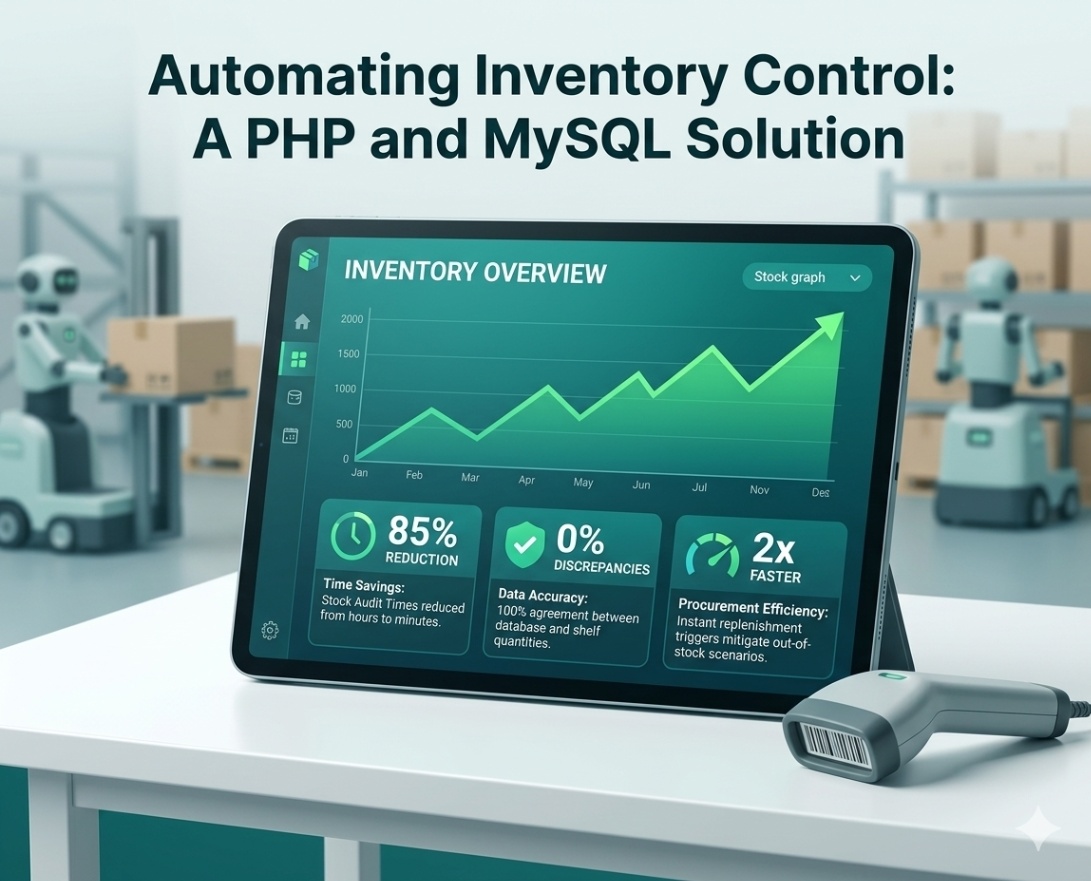
85%
Reduction in Stock Audit Times
Transitioning from physical paper tracking to automated stock deduction reduced weekly auditing windows from several hours to a matter of minutes.
0%
Negative Stock Discrepancies
Transitioning from physical paper tracking to automated stock deduction reduced weekly auditing windows from several hours to a matter of minutes.
Implementing atomic MySQL transactions eliminated race conditions and double-selling errors, ensuring 100% agreement between database records and physical warehouse shelf quantities
2x
Faster Supplier Replenishment Cycles
Automated low-stock threshold triggers allowed the purchasing department to place reorder requests instantly, completely mitigating unexpected out-of-stock scenarios.
Got a project in mind? Let's talk.
Let's discuss your requirements and create something meaningful together.